Saturday, 25 October 2014

Iran Executes Reyhaneh Jabbari, 26-Year-Old Woman Who Killed Her Rapist

Iran has executed 26-year-old Reyhaneh Jabbari, who had killed a man who tried to rape her, despite repeated calls by rights activists for her release.

An Iranian henchman hanged Jabbari at dawn, ending her seven-year jail life awaiting execution.
Jabbari was arrested in 2007 for stabbing an intelligence officer who reportedly tried to sexually assault her.
Jabbari's mother had been informed of her daughter's impending execution. She met Jabbari in the prison for nearly an hour on the day before the execution though the exact place where she was hanged was not revealed.

More than one hundred people including family members and friends gathered outside Gohardasht prison in Karaj city where she was kept, according to local reports.

"Time is running out for Reyhaneh Jabbari, the authorities must act now to stop her execution. Applying such a punishment in any circumstances is an affront to justice, but doing so after a flawed trial that leaves huge questions hanging over the case only makes it more tragic," Hassiba Hadj Sahraoui, deputy director for the Middle East and North Africa with the Amnesty International, had said in a statement.
Human Rights Watch had also urged Iranian authorities to stop the execution.


Tuesday, 30 July 2013

Another letter to Editor on Local Bodies Elections published in Daily Times...!


 LB elections: need of the hour

Sir: It is unfortunate that an unelected dictator held Local Bodies (LB) elections, but the elected democratic government could not hold these elections in its five-year rule. Article 140-A of the 1973 Constitution of the Islamic Republic of Pakistan says, “Each Province shall, by law, establish a local government system and devolve political, administrative and financial responsibility and authority to the elected representatives of the local governments.” Being a citizen of Pakistan, I have a firm belief in the fact that elected local bodies are the foundation of democracy and an integral part of it. Democracy in any country cannot grow further if participation of its citizens in decisions which directly affect their daily lives is not ensured through an institutional system. Majority of the people support and have more faith in the local governments than the provincial and federal governments. The success of the local bodies system possibly lay in the fact that councillors were more easily accessible and ready to take on challenges than MPAs, MNAs, DCs and other bureaucrats. It is demanded of the federal government to fulfil its promise of continuity and protection of LB system and announce a date for holding three-tier LB polls in all three provinces. It is further demanded that LB elections be held under the Election Commission of Pakistan so that international standards can be ensured during the elections. These elections should be held on a party basis because the political parties have a central position in the democratic setup and unless these political parties become organized and strong at the grassroots level, democracy cannot be strengthened. It is also demanded of the government not to delegate magistracy powers to the Executive Officers such as DCOs, etc, because it will directly affect the independence of the judiciary, while the judiciary should be free from all political and government influence.
SHEERIN SOOMRO
Karachi

 Below is the link:
http://www.dailytimes.com.pk/default.asp?page=2013\07\26\story_26-7-2013_pg3_7


Friday, July 26, 2013
Local matters

Elected local bodies are the foundation of democracy. It cannot grow if participation of citizens in the decision-making process is not ensured. People support, and have more faith in, local governments because elected members of local bodies are easily accessible in comparison with MPAs, MNAs, DCs and other bureaucrats. It is unfortunate that while unelected dictators had held LG elections in the country, elected democratic governments could not do it during their tenures.
It is hoped that the PML-N government will hold LB polls in all the four provinces. Ideally, LB elections should be held under the supervision of the Election Commission of Pakistan to ensure fairness and transparency. Moreover, these elections should be held on party basis because political parties have a central role in a democratic setup. Democracy cannot strengthen unless these parties are well-organized and strong at the grass-roots level.
Sheerin Soomro
Karachi
Below is the link:
http://images.thenews.com.pk/26-07-2013/ethenews/e-192444.htm

My Letter to Editor on LG System published in Daily Sindh Express...!

Monday, 15 July 2013


ISLAMABAD: Pakistan's first group of female paratroopers completed their training, the military announced, hailing it as a “landmark achievement” for the country.
Captain Kiran Ashraf was declared the best paratrooper of the batch of 24, the military said in a statement, while Captain Sadia, referred to by one name, became the first woman officer to jump from a MI-17 helicopter.
Women have limited opportunities in Pakistan's highly traditional, patriarchal society. The United Nations says only 40 per cent of adult women are literate, and they are frequently the victims of violence and abuse.
But in 2006 seven women broke into one of Pakistan's most exclusive male clubs to graduate as fighter pilots -- perhaps the most prestigious job in the powerful military and for six decades closed to the fairer sex.
After three weeks' basic airborne training, which included exit, flight and landing techniques, the new paratroopers completed their first jump on Sunday and were given their “wings” by the commander of Special Services Group, Major General Abid Rafique, the military said.

Friday, 28 June 2013

Can you believe this...:)

  Man sues Japan TV station for using too many foreign words

TOKYO: A pensioner is suing Japan's national broadcaster for emotional distress, claiming the overuse of foreign loanwords has rendered many of its programmes unintelligible, his lawyer said.
Hoji Takahashi, 71, is demanding 1.41 million yen ($14,000) in damages for the broadcaster's reliance on words borrowed from English, instead of their traditional Japanese counterparts.
"The basis of his concern is that Japan is being too Americanised," lawyer Mutsuo Miyata said. "There is a sense of crisis that this country is becoming just a province of America."
Japanese has a rich native vocabulary, but has a tradition of borrowing words from other languages, often quite inventively and sometimes changing their meaning in the process.
Most Japanese speakers do not think twice about using words including "trouble", "risk", "drive" or "parking", among many others.
Although English provides the bulk of loanwords - an inheritance of the post World War II US occupation and subsequent fascination with American culture - words borrowed from many other languages are also in use.
Thus, the word for part time work is a Japanised version of the German "arbeit", "concierge" comes from the French and the Spanish "pan" is understood as bread.However, Japan's phonic structure, in which sounds are usually made of a consonant and a vowel, renders many of these borrowed words unintelligible to speakers of the language from which they came.
The English "trouble" becomes "toraburu", for example, while the French "concierge" is pronounced "konsheruju".
Takahashi, a member of "Nihongo wo taisetsu ni suru kai" (The Treat Japanese as Important Association), brought his suit because entreaties to NHK had been ignored, his lawyer said. "He decided to file the suit because the broadcaster did not bother to reply to him," said Miyata, a former highschool classmate of the plaintiff. "This is a matter of Japanese culture, the country itself, including its politics and its economy," he said.


Alarming situation!

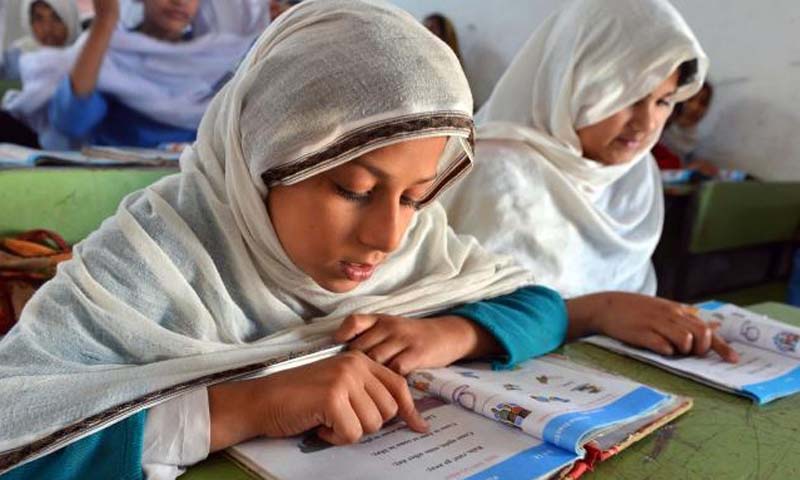
                  Out-of-school children

         Pakistan ranks second in the world


Pakistan ranks the second with the most out-of-school children in the world with only Nigeria ahead of it, said a child rights body on Thursday.
In its annual report titled ‘The state of Pakistan’s children 2012’, the Society for the Protection of the Rights of the Child (Sparc) said about one fourth of the 19.75 million children in Pakistan aged five to nine were out of school and factoring in adolescents increased the number to 25 million. Of them, seven million children (aged three to five) had yet to receive primary schooling.
“The country reduced its spending on education from 2.6 per cent to 2.3pc of the GNP (gross national product) over the decade and ranks 113th of the 120 countries on the Education Development Index,” said the Sparc report launched in a hotel here on Thursday.
At the provincial level, Punjab has the highest NER (net enrolment rate) for children in primary schools at 61pc followed by Sindh with 53pc, Khyber Pakhtunkhwa with 51pc and Balochistan with the lowest at 47pc. Pakistan has an NER of 74.lpc for all age groups enrolled either in primary, secondary or higher education.
Pakistan has the lowest youth literacy rate with 70.7pc. Only 61pc of girls are literate as compared to 79pc boys in the age group of 15-24 years.
Progress has been slowest in low-income countries, especially Pakistan, where only 15pc children received pre-primary education in 2010. It quoted a recent report saying 63pc of children aged three to five years were not receiving any education related to early childhood development.
The country ranks 129th among the 135 countries on the Gender Gap Index 2012 according to the Global Gender Gap Report. Data shows that gender parity for primary schools in Azad Kashmir is close to 1 (0.97). The GPI for Punjab stands at 0.98, in Balochistan it is 0.83 and in Sindh 0.81.
The report said 43pc children born in Pakistan were afflicted with stunting. It was estimated that 21.7pc children were severely and 21.3pc were moderately stunted.
It quoted the United Nations Children's Fund as saying that under five years mortality rate had declined from 122 per 1,000 births in 1990 to 72 per 1,000 births in 2011; far from reaching the assigned target of 52 per 1,000 births as per the millennium development goal.
More than 423,000 children die before reaching their fifth birthday, and almost one in five of these deaths are due to pneumonia.
Pakistan accounted for nearly 30pc of all polio cases recorded worldwide. A total of 142 cases were reported in 2010; 198 cases in 2011. In 2012, the official reports show, 58 cases were recorded, excluding cases in the North and South Waziristan agencies.
It is estimated that 2.1 million cases of measles are reported annually in Pakistan and 21,000 of the reported cases die of complications from the disease. Pneumonia and diarrhoea account for 29pc of deaths among children under five worldwide or more than two million a year; with Pakistan ranking fourth among the countries with the highest prevalence of the disease.
A total of 55 of 96,000 infants, children and adolescents had been identified as HIV positive in Pakistan In 2012, around 5,659 cases of violence against children were reported across Pakistan from January to October 2012. These included 943 murders, 1,170 cases of injuries, 302 of sodomy; 204 of child trafficking, 410 of forced marriages and 164 of Karo-kari (honour killing) incidents, and 260 cases of missing children. Other incidents of violence included 407 cases of sexual assault, 547 torture cases, 323 child suicides, 530 kidnappings and 176 Vani cases.A total of 3,861 cases of child sexual abuse were reported in different parts of the country last year. Most of the cases were reported in Punjab (68pc), followed by Sindh (19pc), Khyber Pakhtunkhwa (5pc), Balochistan (3pc) and FATA (3pc).
The report said 197 of the 3,581 victims of drone strikes since 2004 were children.